
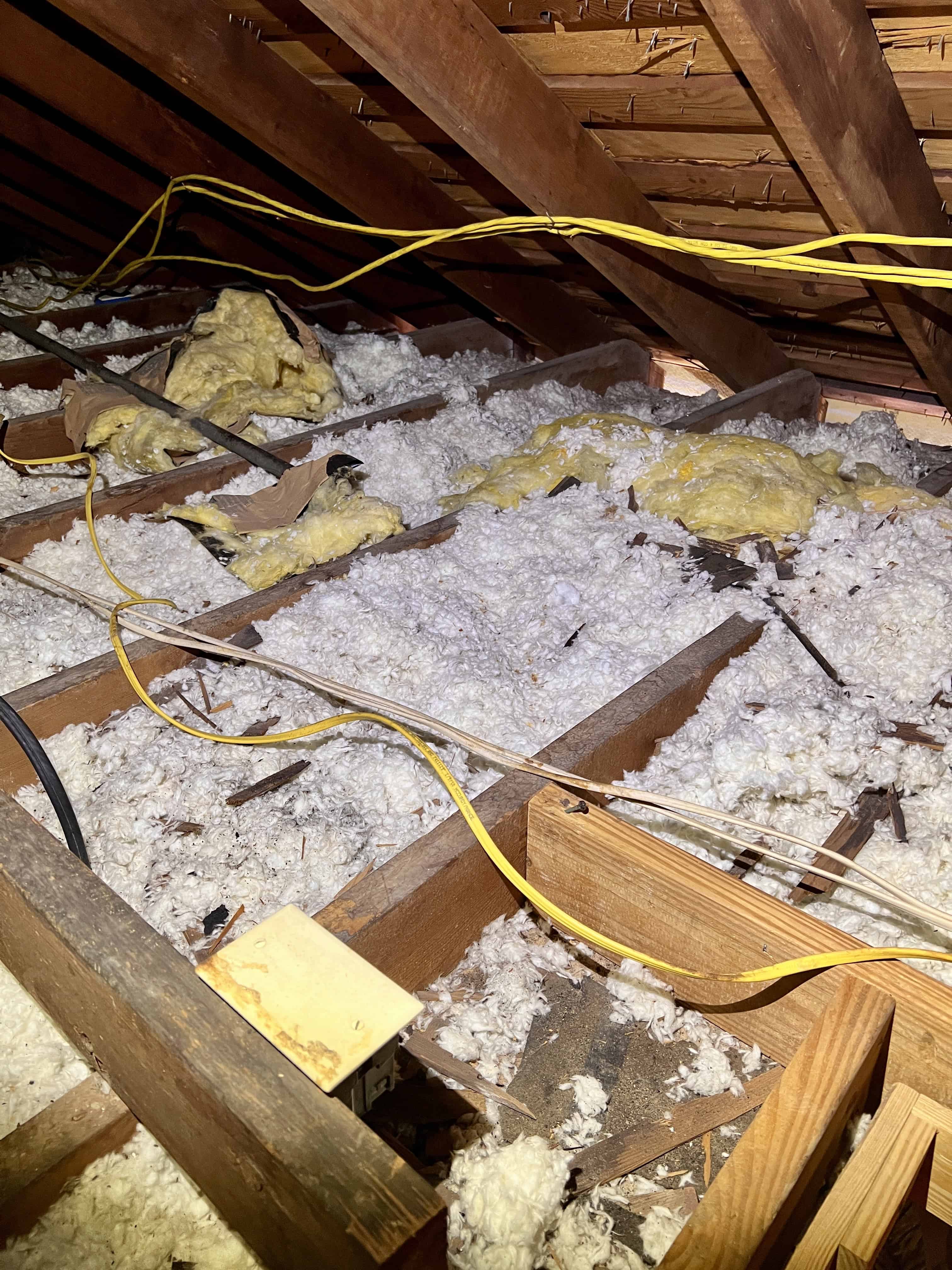
White, fluffy material in an attic is usually loose-fill fiberglass, though pale cellulose can look similar. Fiberglass often resembles soft cotton, while cellulose tends to look denser, dustier, and more paper-like. Color alone cannot prove what you have. Older attics may contain layered materials, and granular vermiculite deserves added care because some products were contaminated with asbestos.
Do not disturb material that looks pebble-like or mica-like until it has been assessed. A proper attic insulation check should identify the material, measure its depth, note gaps or damp areas, and check air leaks before any new product goes in. Those steps help homeowners choose safe, useful next steps.
What Is the White Fluffy Insulation in My Attic?
Is It Loose Fill Fiberglass or Cellulose?
White, soft, cotton like material often points to loose fill fiberglass. The fibers may look light, airy, and slightly shiny under a flashlight. Fiberglass pieces can vary in size. Some areas may look packed down after years of dust, foot traffic, or air movement.
Cellulose usually has a denser look. It often appears gray, dull, or brown. The texture can look like torn paper or soft lint. Cellulose comes from treated paper fibers, so small printed pieces may appear in older material. Still, color alone does not give a firm answer.
Many attics contain more than one insulation layer. A newer white fiberglass layer may cover older cellulose below. Dust can also turn bright material gray. Moisture may cause clumps or flat spots. Look at several areas before making a judgment. Check attic corners, access points, and places where the top layer is thin.
Can Color and Texture Identify It Safely?
Color and texture can help narrow the choices, but a photo cannot confirm the material with full accuracy. Lighting changes the way insulation looks. Dust, moisture, age, and camera settings can also hide useful details. Two products may appear almost the same in a picture.
Start with the age of the home. Then look for product bags, labels, depth markers, or installer notes near the attic opening. Old repair records, home inspection reports, and past energy work may also name the product. Check the lower layers from a safe viewing point. Do not stir, scoop, or pull apart material just to see what sits below.
Use care around old, loose material that looks like small flakes, pebbles, or shiny chips. It may not be fiberglass or cellulose. Avoid touching it until a qualified inspector can review it. Wear proper clothing and limit dust when entering any attic.
Could White Attic Insulation Contain Asbestos?
What Does Vermiculite Insulation Look Like?
Vermiculite does not look like soft cotton or loose wool. It has a dry, grainy texture. The pieces often look like small pebbles, flakes, or shiny chips. Some particles may look silver, gold, gray, or light brown. Others may have a layered appearance like mica. The pieces also vary in shape and size.
White fiberglass near the surface does not prove the full attic is free from vermiculite. A past owner may have placed fiberglass over an older insulation layer. The lower material may remain hidden between the ceiling joists. Do not dig through the top layer to check beneath it. Moving suspected vermiculite may send fine dust into the air. Review old home records or ask a trained asbestos inspector to assess the attic from a safe position.
When Should the Material Be Tested?
Arrange an asbestos assessment before any project that may move suspected vermiculite. This includes attic renovation, insulation removal, electrical rewiring, pipework, ceiling repairs, or new storage flooring. Testing may also be useful before workers cut openings or move material near wires, ducts, and joists.
Do not collect a sample on your own. Scooping, sweeping, drilling, or vacuuming can release dust. Keep children and pets out of the attic. Avoid placing boxes on the material. Tell each contractor about the suspected insulation before work starts.
The EPA advises homeowners to assume vermiculite insulation may contain asbestos. It also advises leaving the material undisturbed. Testing is not needed before taking those safety steps. A trained asbestos inspector can decide if sampling fits the planned work. A qualified removal contractor should handle any material that must be moved.
Is My Attic Insulation Still Working?
What Do Depth, Gaps, and Settling Show?
R value measures how well insulation resists heat flow. A higher R value usually gives better thermal control when the material is installed correctly. Depth matters because loose fill insulation needs enough material to reach its rated level. Thin areas may let more heat pass through the ceiling.
Bare spots around pipes, wires, attic hatches, and wall tops can weaken the whole insulation layer. Compressed batts also lose some of their ability to slow heat transfer. Boxes, boards, and stored items may press the material flat. Loose fill can shift after attic work or strong air movement. It may also settle over time.
Look for depth markers attached to the joists. Compare several parts of the attic, not just the area near the access opening. A full attic check should note depth, gaps, compression, damaged areas, and uneven coverage.
What Do Moisture, Odors, and Pest Signs Mean?
Wet insulation cannot perform as intended. Roof leaks may leave damp clumps, dark stains, or matted fibers. Water can also enter near flashing, vents, pipes, or damaged roof sections. A musty smell may point to trapped moisture or growth on nearby wood and building materials.
Pest activity creates other problems. Droppings, nesting material, tunnels, and strong odors may signal rodents, birds, or insects. Animals can move loose fill, tear batts, and damage wiring. They may also crush or pull apart flexible ducts. A damaged duct can leak cooled or heated air into the attic.
Do not cover these signs with fresh insulation. Find and fix the source first. Repair roof leaks, damaged ducts, and entry points. Remove contaminated material using safe methods. The attic should be dry and clean before new insulation is placed.
Should I Add More Insulation or Remove the Old Material?
Can New Insulation Go Over Existing Insulation?
New insulation can often go over an older layer that is dry, clean, and in good condition. The old material should have no signs of mold, pests, smoke damage, or heavy compression. It should also sit evenly across the attic floor. Adding more material can improve coverage and raise the total R value.
The new insulation does not always need to match the existing product. For example, loose fill fiberglass may go over cellulose in some attic systems. The full setup still needs proper depth, safe clearances, and open vent paths.
Removal may be the better choice when the old material is wet, burned, badly damaged, or filled with pest waste. Strong odors and unknown loose material also need closer review. Fix the cause of the damage before adding a fresh layer. Covering a problem can hide it and increase repair costs later.
Why Should Air Leaks and Roof Leaks Be Fixed First?
Insulation slows heat flow, but it does not stop moving air by itself. Small gaps in the ceiling can let indoor air enter the attic. Common openings appear around plumbing pipes, wire holes, attic hatches, duct chases, and recessed lights. These leaks can reduce comfort and waste heating or cooling energy.
Seal safe gaps before adding more attic insulation. Some recessed lights and hot flues need special clearance, so they should not be covered without checking their rated design. Repair damaged attic hatch seals and close open spaces around ducts and wall tops.
Roof leaks also need repair before new material goes in. Water can soak insulation, stain wood, and create lasting odors. In a vented attic, keep soffit and ridge airflow open. Use baffles where needed so loose fill does not block air moving from the eaves toward the roof ridge.
Which Attic Insulation Type Fits My Home?
How Do Fiberglass, Cellulose, and Spray Foam Compare?
Fiberglass often has the lowest starting cost. It comes as batts or loose fill. Crews usually place it on the attic floor. It slows heat flow but does not seal small air gaps. Air sealing often needs separate work.
Cellulose often falls in the middle cost range. It fits around pipes, wires, and framing better than many batts. It can also reduce some air movement due to its dense form. Wet cellulose can clump, settle, and lose performance. Roof leaks should be repaired before installation.
Spray foam usually costs more. Installers may apply it to the roof deck or other parts of the attic. It can resist heat flow and limit air movement in one layer. Poor application may leave gaps or create moisture concerns. Foam on the roof deck can also affect access during future roof repairs. The best result depends on project design, R value, coverage, and airtightness. Color and product name alone do not predict performance.
Is DIY Installation Worth the Cost and Risk?
DIY attic insulation may reduce labor costs, but the work can be hard and risky. Loose fill projects often require a blower rental. One person feeds material into the machine while another handles the hose. Protective clothing, gloves, eye protection, and a suitable mask help limit contact with fibers and dust.
Attics can become very hot. Low headroom also makes movement difficult. Walk only on secure framing or approved platforms. Ceiling drywall cannot support body weight. Electrical boxes, recessed lights, chimneys, and flues may need open space around them. Covering these areas can create a fire risk.
A contractor may be the safer choice for complex air sealing, roof deck foam, damaged wiring, suspected asbestos, or pest waste. These conditions need special tools, training, and cleanup methods. Compare equipment costs, safety needs, material waste, and your available time before starting the work.
Frequently Asked Questions
Is White Fluffy Attic Insulation Dangerous to Touch?
The risk depends on the material and its condition. Fiberglass can irritate your skin, eyes, throat, and lungs. Attic dust can also cause coughing or discomfort. Wear gloves, long sleeves, eye protection, and a suitable mask before entering the area. Do not touch loose material that looks like shiny flakes or small pebbles. It may be vermiculite. Leave suspected vermiculite in place and have it checked before any work begins.
Why Is My Attic Insulation Turning Gray or Black?
Gray or black areas may form where moving air carries dust through the insulation. Smoke and soot can cause similar marks. Dark patches may also point to a roof leak, moisture damage, mold like growth, or pest debris. Check for damp fibers, stains, odors, droppings, and damaged wood. Fix the source before adding new insulation or covering the affected area.
Can Spray Foam Go Over Loose Fill Insulation?
Placement matters. Spray foam on the roof deck creates a different thermal boundary from loose fill on the attic floor. Using both without a clear plan may trap heat or moisture in the wrong area. A contractor should review the attic design, ventilation, ducts, and roof structure first. The loose fill may stay, move, or need removal based on the planned system.
What Affects Attic Insulation Cost in Houston?
Cost depends on attic size, access, material choice, and the target R value. Removal, pest waste, water damage, air sealing, vent work, duct repairs, and cleanup can raise the total. Tight spaces and steep roof lines may also add labor. Compare written scopes from each contractor. Check the listed depth, R value, material, repairs, removal work, and cleanup instead of choosing by price alone.
Choose a Better Attic With First Defense Insulation
White, fluffy insulation may be doing its job, or it may be thin, shifted, damp, contaminated, or hiding air leaks. A home assessment can confirm the material, measure current R-value, inspect problem areas, and show if adding insulation, removal, air sealing, or spray foam fits the attic.
For Houston-area homeowners, First Defense Insulation provides attic and spray foam services based on the home’s layout and comfort concerns. Clear findings also help clients compare scope, price, and likely value before work begins. To discuss high energy bills, hot rooms, dusty air, or aging insulation, visit us at 12 Greenway Plaza, Suite 1147, Houston, Texas, 77046, or call 713-808-9853 for an attic insulation assessment. Let us inspect your attic and build a plan for a more comfortable home.