TL;DR
- The U.S. Department of Energy strongly recommends against laying foil on top of attic floor insulation, the quickest and lowest-labor method.
- Rafter installs cover the roof underside, which runs 5% to 41% larger than the attic floor depending on pitch, so per square foot quotes can count different areas.
- Product type, attic access, ducts and framing, old insulation and add-on work move the price the most.
- There’s no federal tax credit for a 2026 install, and Texas HOMES and HEAR rebates haven’t launched.
- A fair quote states the area, where the barrier goes, the product, prep work and warranty.
One liner: Compare radiant barrier quotes on area and install location first, then price.
What Radiant Barrier Installation Costs
In short: National data puts radiant barrier installation cost at $350 for a small 500 sq ft attic and up to $4,000 for a 2,000 sq ft attic.
Size drives most of the spread. Here’s how the 2026 national figures break down by attic size:
| Attic size | Installed cost (national) | Per sq ft |
|---|---|---|
| 500 sq ft | $350 to $1,000 | $0.70 to $2.00 |
| 1,000 sq ft | $700 to $2,000 | $0.70 to $2.00 |
| 1,500 sq ft | $1,050 to $3,000 | $0.70 to $2.00 |
| 2,000 sq ft | $1,400 to $4,000 | $0.70 to $2.00 |
Labor is a big share of that. Installers charge about $0.60 to $1.00 per square foot to put up foil or spray coatings, which works out to roughly $30 to $80 an hour, and labor makes up roughly half the project cost.
Treat these numbers as a starting point, not a Houston quote. A real price starts with someone measuring your attic, checking how easy it is to get into, and deciding where the barrier goes. Two quotes for the same 1,500 sq ft attic can sit almost $2,000 apart inside the national range, so the method behind each total matters as much as the total itself.
Why the Cheapest Radiant Barrier Quote Often Skips the Rafters
In short: The U.S. Department of Energy strongly recommends against laying a radiant barrier directly on top of attic floor insulation, and that floor-laid method is also the quickest, lowest-labor way to install one.
Some quotes come in low because the plan is to roll foil across the top of your attic floor insulation. The U.S. Department of Energy advises against exactly that: it says not to apply radiant barriers directly on top of attic floor insulation, because the foil collects dust and may trap moisture in the insulation below.
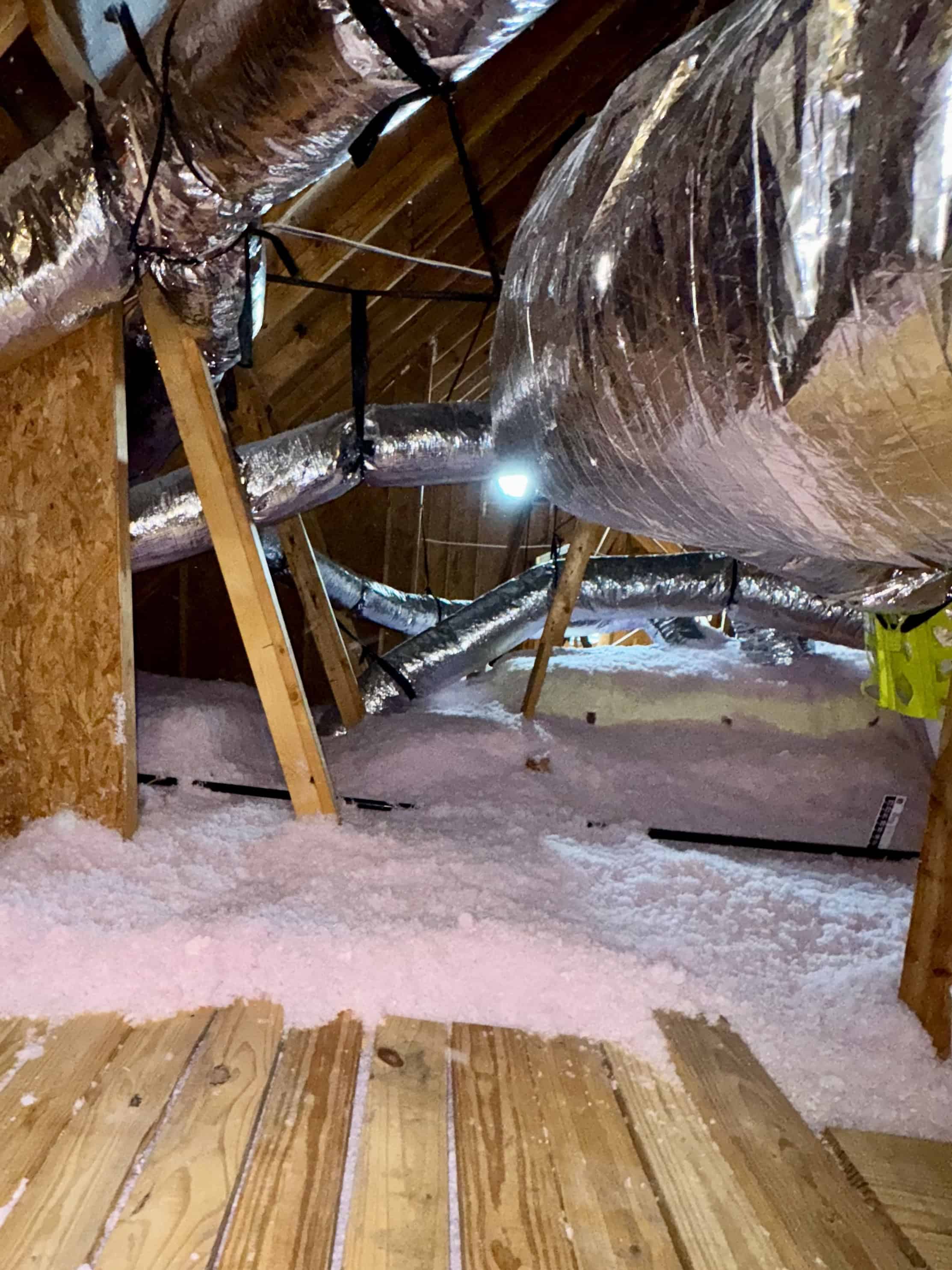
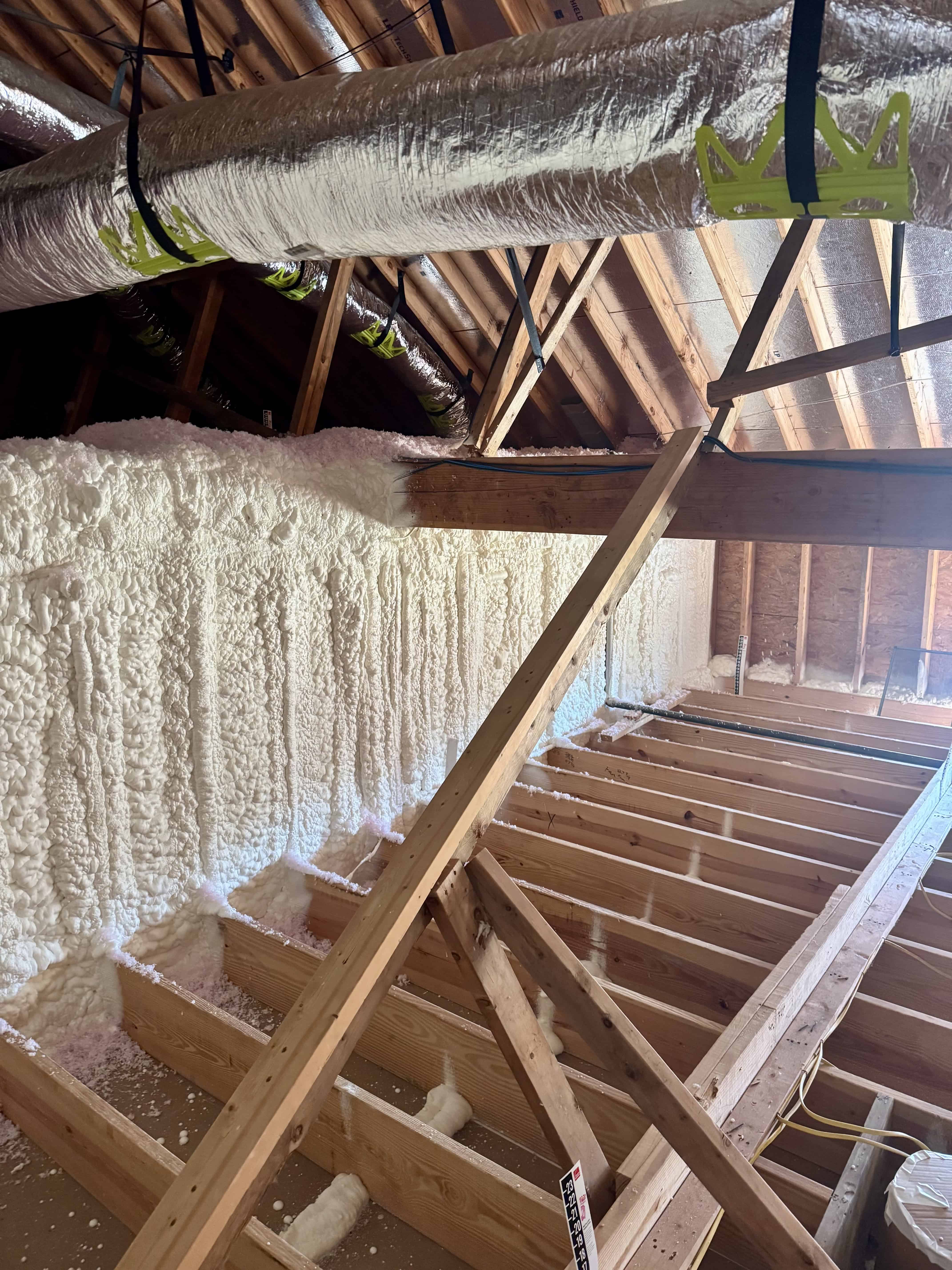
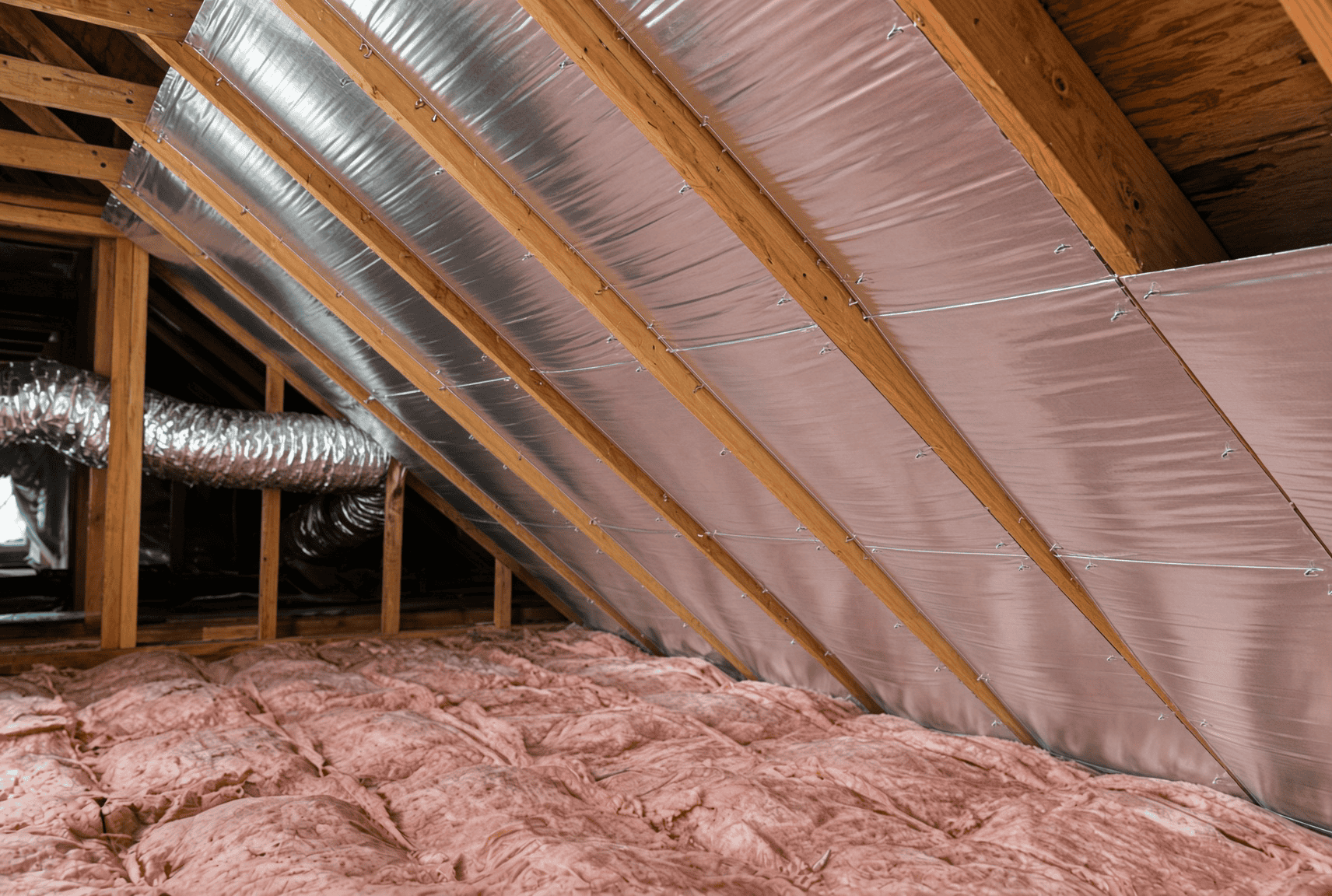
Dust matters because a radiant barrier works by reflecting heat, and DOE notes that dust on the reflective surface cuts how well it reflects. Foil lying flat on the attic floor is a shelf for that dust. For new homes, DOE describes foil draped face down between the rafters to keep dust off the reflective side. In an existing attic, the same material can be stapled to the bottom of the rafters from inside.
| Detail | Rafter install | Floor-laid foil |
|---|---|---|
| Where it goes | Stapled to the bottom of the roof rafters, drooped for at least 1 inch of air space below the roof | Rolled across the top of the attic floor insulation |
| Labor | More: overhead stapling around the framing | Less: rolled out across the joists |
| Dust | Reflective face points down, little place for dust to settle | Top face sits open to settling dust |
| Moisture | Sits away from the insulation | May trap moisture in fiber insulation |
| DOE position | Method DOE describes for new and existing attics | Strongly recommended against |
So when two quotes for the same attic sit far apart, ask each installer one question: where does the barrier go? If the answer is the attic floor, the lower price may buy foil that reflects less every year as dust builds up. DOE also says a radiant barrier’s results depend on proper installation. At First Defense, radiant barriers go on the underside of the roof rafters, facing an open air space.
Radiant Barrier Cost Per Square Foot: Which Square Feet?
In short: Radiant barrier cost per square foot only compares fairly when two quotes count the same area, and a rafter install covers the roof underside, which is larger than the attic floor.
National cost guides price radiant barriers by attic size. Foil stapled to the rafters doesn’t cover the attic floor, though. It covers the underside of the roof, and a sloped roof has more surface than the flat floor below it. The steeper the pitch, the bigger that gap gets.
| Roof pitch | Roof underside over a 1,500 sq ft attic floor | Extra area |
|---|---|---|
| 4/12 | About 1,580 sq ft | 5% |
| 6/12 | About 1,680 sq ft | 12% |
| 8/12 | About 1,800 sq ft | 20% |
| 10/12 | About 1,950 sq ft | 30% |
| 12/12 | About 2,120 sq ft | 41% |
Those figures are roof math alone. Overhangs, dormers and any gable walls the installer also covers add more.
Here’s why it matters. Say an installer charges $1.20 per square foot. On floor area, a 1,500 sq ft attic comes to $1,800. Price the same job on the roof underside of a 6/12 roof and it’s about $2,020. Neither number is wrong, but one installer can look cheaper per square foot while billing more total area, or the reverse. When you compare radiant barrier cost per square foot installed, ask each quote to state the area it covers and whether it was measured on the floor or the roof.
What Changes the Attic Radiant Barrier Price
In short: Product type, total area, attic access, obstacles, old insulation and add-on work move an attic radiant barrier price more than anything else.
Pricing a radiant barrier works a lot like pricing a paint job. Open wall goes fast, while corners and trim eat the hours. In an attic, open rafter bays are the easy part. Tight eaves, ductwork and bracing are where the time goes.
| Driver | What raises the price | Why |
|---|---|---|
| Product type | Two-sided foil or a spray coating instead of one-sided foil | Materials run about $0.10 to $0.50 per sq ft for one-sided foil, $0.50 to $0.90 for two-sided and $0.65 to $1.00 for spray coatings |
| Area and pitch | A bigger attic or a steeper roof | The roof underside runs 5% to 41% larger than the floor across common pitches |
| Attic access | A small hatch, low headroom, no walkway | More time moving material and crew |
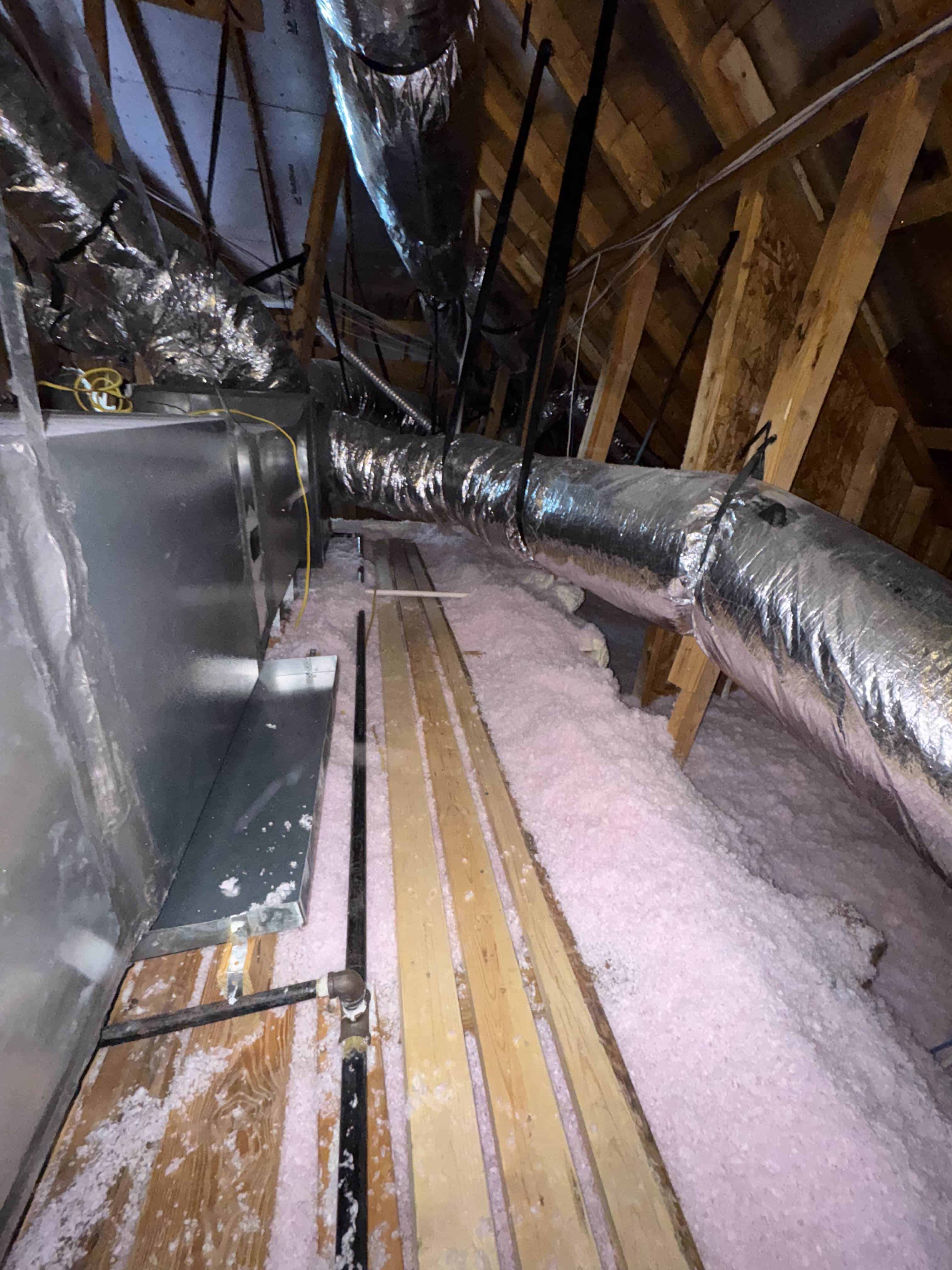
| Ducts and framing | Ductwork, braces and trusses crowding the rafter bays | Foil has to be cut and fitted around each one |
| Old insulation | Wet or damaged insulation found during the visit | Removal or replacement is separate work with its own price |
| Add-on work | An insulation top-up or air sealing in the same visit | Adds cost, but one setup can save a second trip |
Most of these land on labor, not materials. A cramped attic with ducts in every bay takes longer to staple than an open one, even with the same foil.
If your attic insulation is thin or patchy, price a top-up in the same visit. The two do different jobs: a radiant barrier cuts radiant heat gain from the roof, while insulation slows heat moving by conduction. That’s why a good quote lists them as separate lines. Nationally, blown-in attic insulation runs about $0.50 to $2.30 per square foot.
What a Radiant Barrier Quote Should Include
In short: A fair radiant barrier quote states the area, where the barrier goes, the product, the prep work and the warranty, so you can compare one bid against another line by line.
Picture two quotes on the kitchen counter. One says “radiant barrier, $1,900.” The other says “radiant barrier, $1,400.” There’s no way to tell which is the better deal, because neither one says what you’re buying. A useful quote spells out these eight lines:
- Area covered in square feet, and whether it was measured on the attic floor or the roof underside
- Where the barrier goes: stapled to the rafters with an air space below the roof, not laid on top of the attic floor insulation
- Product name and type (one-sided foil, two-sided foil or a spray coating), with the spec sheet available
- The product’s fire rating
- How attic vents, wiring and light fixtures stay clear of the foil
- Prep work, including how old or damaged insulation will be handled and priced
- Cleanup and how long the job takes
- Warranty terms on the product and the labor
If a quote leaves out lines 1 and 2, ask for them in writing before you sign. Those two lines decide whether a lower price is a real saving or a smaller, faster job. First Defense gives free estimates after an on-site look at your attic, so the quote reflects the attic you actually have.
Tax Credits, Rebates and Financing in Houston
In short: There’s no federal tax credit for a radiant barrier installed in 2026, Texas home energy rebates haven’t launched, and financing is the main way to spread the cost.
Some cost guides still say a radiant barrier may qualify for a federal tax credit. That window has closed. The IRS Energy Efficient Home Improvement Credit covers qualifying property placed in service before December 31, 2025. The state side isn’t open yet either. The Texas Comptroller says its home energy rebate programs are still in planning and design, with no rebates available and no applications being taken.
| Option | Status in 2026 | What it means for you |
|---|---|---|
| Federal Energy Efficient Home Improvement Credit (25C) | Covers property placed in service before December 31, 2025 | No federal credit on a 2026 install |
| Texas HOMES and HEAR rebates | Not launched, no applications open | Nothing to claim yet; HEAR will be limited to income-qualified households |
| First Defense financing | Available on approved credit | Monthly payments instead of one lump sum |
First Defense offers financing through two lenders. The EnerBank USA installment loan, provided by Regions Bank, carries a fixed APR of 8.99% to 24.49%, subject to change, with repayment terms of 12 to 144 months. Its minimum monthly payment runs $11.37 to $94.80 per $1,000 borrowed and is never less than $50. On an $1,800 job, that puts the minimum payment between $50 and about $171 a month. Foundation Finance Company is the second option, and its prequalification uses a soft credit pull.
Does a Radiant Barrier Pay Off in Houston?
In short: The U.S. Department of Energy says radiant barriers do the most good in hot climates, especially when cooling ducts run through the attic.
DOE puts a number on it: some studies show radiant barriers can cut cooling costs 5% to 10% in a warm, sunny climate. If your summer cooling bill runs $250 a month, that’s $12.50 to $25 back each month while the AC works hardest. DOE also notes the lower heat gain may even allow for a smaller air conditioning system.
Those results depend on proper installation, which brings it back to where the foil goes. A barrier stapled to the rafters keeps its reflective face out of the dust. For the longer answer on whether a radiant barrier works, including its R-value and where it should go, see the FAQ on our radiant barrier page.
Radiant Barrier Cost FAQ
In short: quick answers on price, floor-laid foil, DIY, spray foam, reflective insulation, tax credits and install time.
How much does radiant barrier cost?
Professional installation runs $710 to $2,840 nationally, or about $0.70 to $2.00 per square foot based on attic size. Your price depends on the area covered, whether it’s measured on the floor or the roof, the product, attic access and any prep work. A Houston quote starts with measuring your attic.
Can a radiant barrier go over existing attic insulation?
The U.S. Department of Energy strongly recommends against it. Foil laid directly on top of attic floor insulation collects dust, which cuts its reflectivity, and it may trap moisture in the insulation. The method DOE describes is foil stapled to the bottom of the rafters, drooped to leave at least 1 inch of air space below the roof.
Can I install a radiant barrier myself?
Some homeowners do, but it means stapling foil overhead across every rafter bay in a hot attic, leaving an air space below the roof and keeping the foil clear of vents, wiring and light fixtures. DOE notes a radiant barrier’s results depend on proper installation, so a mistake can cost you the savings you paid for.
Is a radiant barrier cheaper than spray foam?
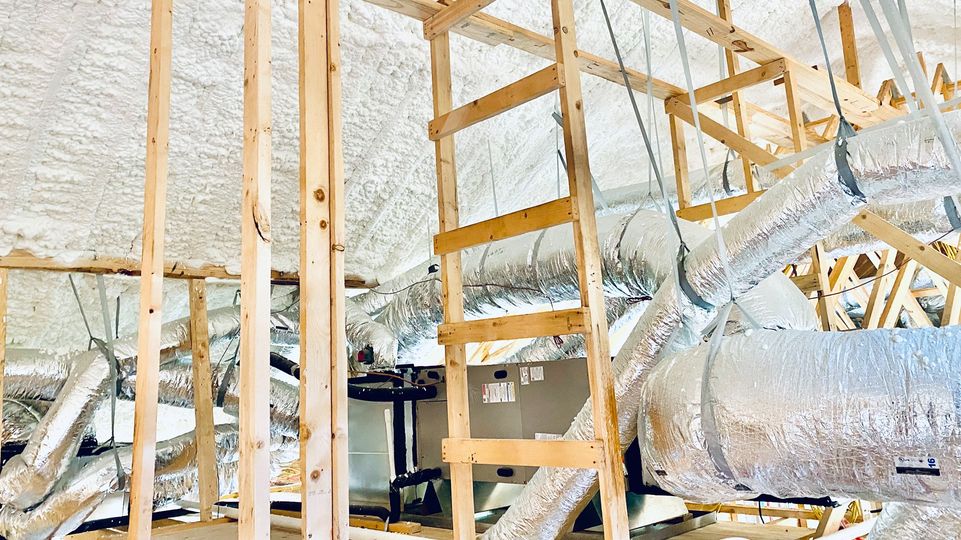
Yes, a radiant barrier is the more affordable of the two, but they do different jobs. A radiant barrier reduces radiant heat gain from the roof and doesn’t slow heat conduction. Spray foam adds insulation value and seals air leaks. The right pick depends on whether your attic’s main problem is roof heat or air leaks.
Is reflective insulation the same as a radiant barrier?
Not quite. A radiant barrier is reflective foil that cuts radiant heat gain from the roof. Reflective insulation systems combine a radiant barrier with an insulation material, so the foil acts as the insulation’s facing. The foil reflects heat in both cases, but only the insulation layer slows heat moving by conduction.
Is there a tax credit for a radiant barrier in 2026?
No. The IRS Energy Efficient Home Improvement Credit covers qualifying property placed in service before December 31, 2025. Texas home energy rebates under the HOMES and HEAR programs haven’t launched and aren’t taking applications. First Defense offers financing if you’d rather spread the cost over monthly payments.
How long does radiant barrier installation take?
First Defense finishes most residential insulation projects in a single day, typically within 4 to 6 hours. A radiant barrier job’s time depends on attic size, access, roof pitch and how much ductwork and framing the crew has to work around, so the estimate visit is where you get a firm schedule.
Ready to compare a real number with the ranges above? Call First Defense Insulation at (713) 808-9853 for a free estimate. We’ll measure your attic, show you where the barrier goes and why, and spell out every line of the quote.
Sources
- Angi, How Much Does a Radiant Barrier Cost to Install? [2026 Data], 2026-07-09
- U.S. Department of Energy, Energy Saver, Radiant Barriers, accessed 2026-10-07
- Internal Revenue Service, Energy Efficient Home Improvement Credit, reviewed 2026-04-28
- Texas Comptroller of Public Accounts, State Energy Conservation Office, Inflation Reduction Act Home Energy Rebates, updated 2026-05-19
- First Defense Insulation, Radiant Barrier Installation Houston, Texas, accessed 2026-10-07
- First Defense Insulation, Houston Attic and Spray Foam Insulation Contractor, accessed 2026-10-07