
Updated November 6, 2026. First Defense Insulation, 12 Greenway Plaza Suite 1147, Houston, TX 77046.
Direct Answer
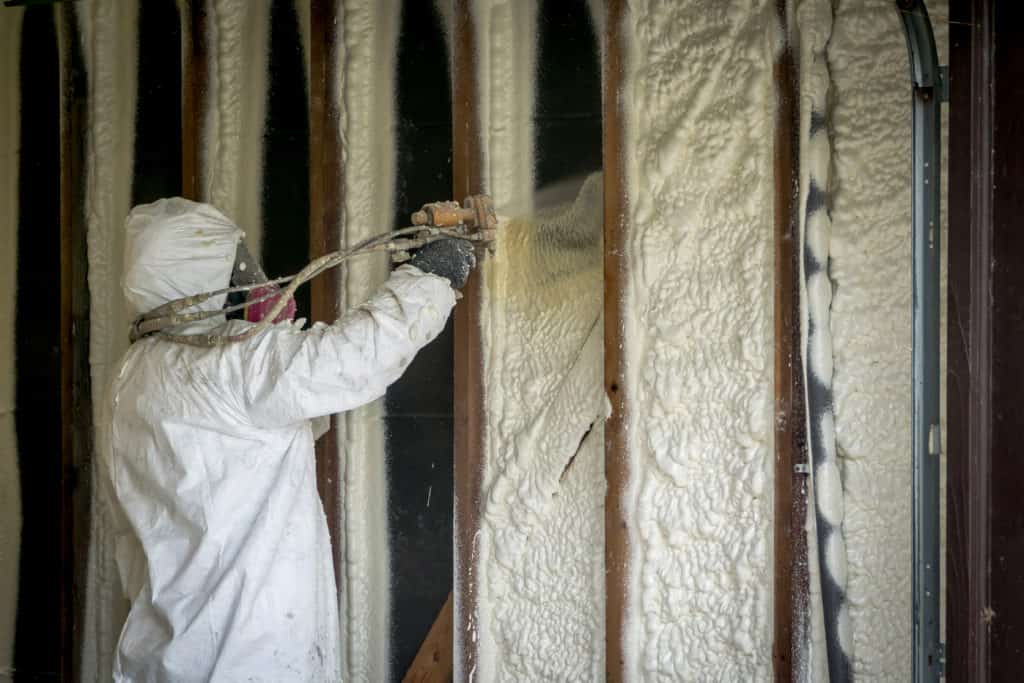
To remove spray foam insulation, cut it out and scrape it off the wood by hand inside a closed-off, ventilated attic, with workers in protective gear. EPA lists grinding, sanding and sawing as heat-generating work that may release isocyanates from the foam [4]. Open cell comes out in sections; closed cell takes heavy scraping.
TL;DR
- Spray foam only has to come out for a specific problem: a wet or rotted roof deck, foam applied wrong, renovation access, or water, fire or pest damage.
- No grinding, sanding or heat. EPA says that kind of work may release isocyanates and amines from the foam [4].
- Solvents don’t remove cured foam, so it comes off by cutting and scraping [7].
- Open cell is about a quarter the density of closed cell, and closed cell holds on like adhesive, so it takes more labor [9][12].
- National removal pricing runs $3.15 to $7.50 per square foot, before anything goes back in [13].
- With foam off the deck, the attic is either vented again or re-foamed, and Houston’s code target for attic ceilings is R-49 [18].
One liner: Find the cause, take the foam off cold and contained, then rebuild the attic to code.
Key Numbers
| Stat | What it measures | Source |
|---|---|---|
| $3.15 to $7.50 per sq ft | National spray foam removal cost | HomeAdvisor, 2026 [13] |
| $3,200 to $10,800 | National cost to remove and replace insulation | HomeAdvisor, 2026 [13] |
| $35 to $85 per hour | Insulation removal labor | HomeAdvisor, 2026 [13] |
| Below 18% | Roof deck moisture before spray foam goes on | U.S. DOE Building America, 2013 [1] |
| About 0.5 vs 2 lb per cu ft | Open cell vs closed cell density | U.S. EPA [9] |
| About 10x | Closed cell compressive strength vs open cell | DOE Building America, 2009 [12] |
| 1/150, or 1/300 | Attic net free vent area under the 2021 IRC | ARMA, 2022 [15] |
| R-49 | Houston minimum ceiling insulation, climate zone 2 | City of Houston, 2025 [18] |
| January 2, 2024 | Houston 2021 residential and energy codes took effect | International Code Council, 2023 [17] |
When Spray Foam Insulation Removal Is Needed
In short: Spray foam insulation removal is needed when foam hides a wet or damaged roof deck, was applied wrong, or blocks repair work. EPA says correctly applied, cured foam is usually considered relatively inert [4], so removal is about fixing a specific problem.
It often starts with a ceiling stain after a summer storm. You climb into the attic, and the roof deck above the stain is buried under foam, so you can’t see where the water got in or how far it spread.
That’s the most common reason foam has to come out. U.S. Department of Energy Building America guidance says roof sheathing and framing should be dry below 18% moisture before spray foam goes on, under a leak-free roof [1]. When either condition fails, the wood behind the foam has to be opened up, checked and repaired.
The main cases look like this:
- A roof leak or decking repair. Wet or rotted sheathing has to be exposed before it can be checked and replaced.
- A damp roof deck. In an Oak Ridge National Laboratory study of sealed attics in hot, humid Charleston, South Carolina, researchers removed foam and found moisture where the rafters meet the sheathing [2].
- Foam that was applied wrong. EPA says improperly applied foam can be the source of a lingering odor [4].
- Renovation. New wiring, plumbing or framing behind the foam. EPA advises finding out whether spray foam is present before you renovate [4].
- Water, mold, rodent, fire or smoke damage, the same reasons any insulation removal job starts [5].
Not every problem means tearing foam out. Building Science Corporation’s Joseph Lstiburek has reported humid unvented attics with open cell foam in hot, humid climates, and his fix is to dry the attic air with dehumidified air or an air change [3]. He says he has no problem with open cell foam itself. That’s why the first step is an inspection, not a scraper.
Why Heat and Grinding Are the Wrong Way to Remove Spray Foam
In short: EPA lists drilling, grinding, sawing and sanding as heat-generating processes that may release isocyanates and amines from spray foam, and says workers shouldn’t heat or grind it [4]. Cured foam comes off by contained cutting and scraping, with workers in protective gear.
Plenty of DIY guides treat removal as a tool choice: a grinder, a heat gun or a can of solvent. EPA says heat-generating work on or near spray foam may release airborne chemicals, including isocyanates (the reactive ingredient in spray foam) and amines, and that plumbers and electricians shouldn’t heat or grind it [4]. There’s also no rulebook to fall back on. EPA isn’t aware of a standard accepted removal practice, and CPSC warns that disturbing foam the wrong way can create dust or hazardous materials, especially with processes that heat it [4][6].
Here’s how the common methods compare:
| Method | What the source says | How a careful crew handles it |
|---|---|---|
| Grinding or sanding | On EPA’s list of heat-generating processes that may release isocyanates and amines [4] | Not used to clear foam |
| Heat gun, heated blade, torch or other hot work | EPA says hot work on or near foam may lead to isocyanate exposure [4] | Never used |
| Power sawing or drilling | Also on EPA’s heat-generating list [4] | Kept limited, with workers in PPE [8] |
| Solvent on cured foam | DuPont, maker of Great Stuff foam, says dried foam can’t be removed with any solvents or cleansers [7] | Skipped; solvents only work on uncured foam [7] |
| Hand cutting and scraping | DuPont says cured foam must be removed mechanically [7]; EPA calls for PPE during any cutting and scraping [8] | The main method, inside an isolated, ventilated work area [8] |
If odor is why you want the foam gone, find the source first. EPA says chemicals from improperly applied foam may have spread to other surfaces, so removal may not fix the smell, and it suggests an indoor air quality (IAQ) consultant to diagnose it [4].
Before any crew starts, ask the question on CPSC’s consumer checklist: how will you isolate and ventilate the work area? [6] At First Defense, every job starts with a free evaluation. Then the crew protects your home, removes and bags the material, and loads it into an on-site dumpster for disposal [5].
How Open Cell Spray Foam Is Removed
In short: Open cell foam is cut out of the rafter bays in sections, scraped off the roof deck, bagged and vacuumed up. At about half a pound per cubic foot, it’s a quarter the density of 2-pound closed cell foam [9], so it comes out faster.
Cutting open cell foam is closer to trimming upholstery foam than chipping plaster. It’s soft and light, and most of it pulls away from the wood once a bay is cut free. First Defense rates its open cell and closed cell spray foam insulation at R-3.8 and R-7 per inch [10], and the open cell’s lighter, airier structure is what makes it the easier of the two to take out. Here’s how to remove spray foam insulation of this type the careful way:
- Evaluate first. Find out why the foam is coming out and whether the roof deck is wet or damaged.
- Isolate and ventilate the attic. Seal the work zone off from the living space and move air out of it, with workers in protective gear [8].
- Cut the foam out in sections. Work bay by bay, cutting along each rafter and across the bay with a long serrated insulation knife or hand saw.
- Scrape the residue. Cured foam has to come off mechanically, so the thin layer left on the deck and rafters gets scraped with a putty knife or flat scraper [7].
- Bag as you go. Full bags go straight to an on-site dumpster [5].
- Clean up. A HEPA-filtered vacuum, damp rags and fans, the same cleanup used after any attic insulation removal [11].
- Check the wood. Repair any damage and let the deck dry before anything goes back. DOE’s benchmark before new foam goes on is sheathing below 18% moisture [1].
Removing Closed Cell Spray Foam From a Roof Deck
In short: Removing closed cell spray foam takes more labor because the foam is rigid and bonds hard to the wood. DOE Building America guidance puts 2-pound closed cell at about four times the density of open cell and ten times its strength in compression [12].
Closed cell holds on like construction adhesive, and that’s close to literal: modular home factories use it as a structural adhesive to glue drywall to studs and joists [12]. On a roof deck, it doesn’t come out of a bay in one piece the way open cell does. Crews cut it back close to the wood in passes, then scrape what’s left off the sheathing and rafters by hand [7].
| Detail | Open cell | Closed cell |
|---|---|---|
| Density | About 0.5 lb per cubic foot [9] | About 2 lb per cubic foot [9] |
| Strength | Compresses under hand pressure [12] | About 10 times stronger in compression, 7 times in tension [12] |
| R-value per inch at First Defense | 3.8 [10] | 7 [10] |
| Vapor | About 10 perms at 5 inches [12] | Under 1 perm at 2 inches, a vapor retarder [12] |
| How it comes off | Cut out in sections, light scraping | Cut back in passes, heavy scraping |
| Labor | Lower | Higher |
When the sheathing under closed cell foam is rotted, scraping it clean makes little sense. The damaged boards get replaced, often in step with the roofer, and the foam bonded to them goes out with the old decking. Sound boards around the patch stay in place, and the foam on them gets cut back to a clean edge so the new section can be insulated to match.
Spray Foam Removal Cost
In short: National spray foam insulation removal cost data puts the job at $3.15 to $7.50 per square foot, the highest of the insulation types HomeAdvisor lists [13]. Closed cell, a large roof deck and repairs underneath push a job toward the top of that range.
Spray foam is the priciest insulation to take out. HomeAdvisor’s national figures put its removal at $3.15 to $7.50 per square foot, against $0.65 to $2 for batts and $1.65 to $3.80 for blown-in, which can be vacuumed up [13]. Pros charge about $35 to $85 an hour, and disposal is usually part of the price [13].
Here’s a quick number. Foam on a roof deck covers the sloped underside of the roof, not the attic floor. A 1,500 sq ft attic under a 6/12 roof has about 1,680 sq ft of deck, so full removal at the national rates comes to roughly $5,300 to $12,600. That’s a national range, not a Houston quote.
| Cost driver | What raises the price |
|---|---|
| Foam type | Closed cell, which bonds harder and takes more scraping |
| Area and pitch | A bigger attic or a steeper roof means more deck to clear |
| Thickness | More inches of foam to cut through |
| Access | Low headroom, ductwork and tight eaves |
| Deck repair | Wet or rotted sheathing found under the foam |
| What goes back in | New insulation and venting, priced as separate work |
Removal is only half the bill. Nationally, removing and replacing insulation runs $3,200 to $10,800 [13]. First Defense gives free estimates after an on-site look, and financing through EnerBank USA and Foundation Finance Company can spread the cost into monthly payments [14].
What Goes Back In After Spray Foam Removal
In short: Once spray foam comes off the roof deck, the attic is either turned back into a vented attic with insulation on the floor, or re-foamed as an unvented attic. In Houston, the code’s prescriptive ceiling target for climate zone 2 is R-49 [18].
Foam on the underside of the roof is what made the attic unvented. Take it off, and the attic needs a new plan before anything goes back. The residential code covers unvented attics in Section R806.5, which calls for air-impermeable insulation, such as spray foam, in direct contact with the underside of the roof deck [16]. Anything else means venting the attic again. The 2021 code minimum is 1 square foot of net free vent area for every 150 square feet of attic floor, or 1 per 300 under the code’s exception, with intake and exhaust balanced [15].
| Detail | Back to a vented attic | Re-foam the roof deck |
|---|---|---|
| Where insulation goes | Attic floor | Underside of the roof deck [16] |
| Venting | Soffit intake plus high exhaust [15] | Vents closed off |
| Code section | IRC R806 roof ventilation [15] | IRC R806.5 unvented attics [16] |
| Typical materials | Blown-in or batt insulation, with air sealing first [11] | Open or closed cell spray foam |
| Extra work | Rafter vent baffles so insulation can’t block the soffits [11] | An ignition barrier in the attic, or a thermal barrier where foam faces living space [10] |
Here’s a quick number for the vented path. A 1,500 sq ft attic at the 1-in-300 ratio needs 5 square feet, or 720 square inches, of net free vent area, split between low intake and high exhaust.
Houston adopted the 2021 residential and energy codes, effective January 2, 2024 [17], and the city’s compliance form lists a minimum ceiling R-value of 49 for climate zone 2 [18]. First Defense handles both paths: blown-in or batt insulation and radiant barriers for a vented attic, or new open or closed cell foam on a repaired deck.
Can You Remove Spray Foam Insulation Yourself?
In short: You can remove a small patch of open cell foam yourself with hand tools and protective gear. A full roof deck, any closed cell foam, a wet deck or an odor problem is a job for a crew.
If the job needs more than a utility knife and an afternoon, it needs a crew. Before you cut into a small open cell patch, run through this list:
- Wear protective gear, which EPA calls for during any cutting and scraping of foam [8].
- Close off the work area from the house and move air out of it [8].
- Use hand tools only. No grinders, sanders or heat guns [4], and skip solvents, which don’t remove cured foam [7].
- Watch for wiring buried in the foam.
- Lay boards across the joists so you don’t step through the ceiling [11].
- Bag the foam as it comes off [5].
Stop and call a pro if the foam is closed cell, covers the whole deck, sits on wet or soft wood, or you’re chasing a smell. EPA says removal may not fix an odor from improperly applied foam [4], so that job starts with a diagnosis. First Defense offers a free evaluation at (713) 808-9853.
Frequently Asked Questions
In short: quick answers on the best removal method, wood and roof decks, closed cell, odor and cost.
What is the best way to remove spray foam insulation?
Cut it out and scrape it off by hand inside a closed-off, ventilated work area, with workers in protective gear. Leave out grinders, sanders, heat and solvents [4][7]. Open cell comes out in sections. Closed cell takes more scraping.
How do you remove spray foam insulation from wood?
Here’s how to remove spray foam insulation from wood. Cut the foam back close to the rafters and sheathing, then scrape off the thin layer that’s left. Cured foam has to come off mechanically, because dried foam can’t be removed with any solvents or cleansers [7]. Once the wood is bare, check it for moisture and damage before anything new goes on it.
Can spray foam be removed from a roof deck without replacing the roof?
Yes. Crews remove roof deck foam from inside the attic, cutting and scraping it off the sheathing and rafters. Decking only gets replaced where the wood under the foam is rotted, and the foam bonded to those boards goes out with them. Sound sections of the deck stay in place.
Is closed cell spray foam removal harder than open cell?
Yes. DOE Building America guidance puts 2-pound closed cell at about four times the density of open cell and ten times its strength in compression, and it’s even used as a structural adhesive [12]. It bonds hard to the wood, so it takes more cutting passes and heavier scraping, which raises the labor cost.
Will removing spray foam get rid of the smell?
Not always. EPA says that when foam was applied improperly, chemicals may have spread to other surfaces, so removal may not resolve the odor [4]. EPA suggests an indoor air quality consultant to find the source. First Defense starts every removal with a free evaluation, so the cause gets checked before any foam comes out.
How much does spray foam insulation removal cost?
National figures put spray foam removal at $3.15 to $7.50 per square foot [13]. Closed cell, a large or steep roof deck and repairs underneath push the price up. The new insulation and venting that go back in are priced separately, so ask for both on one estimate.
Wondering whether your spray foam has to come out? Call First Defense Insulation at (713) 808-9853 for a free evaluation. We’ll check the roof deck, find what’s causing the problem, and price the removal and what goes back in on one estimate.
Definition Bank
| Term | Meaning |
|---|---|
| Spray polyurethane foam (SPF) | Insulation sprayed as a liquid that expands and cures into foam; EPA lists open cell and closed cell types [9]. |
| Open cell spray foam | Low-density foam, about half a pound per cubic foot, soft enough to compress by hand [9][12]. |
| Closed cell spray foam | Medium-density foam, about 2 pounds per cubic foot, rigid and a vapor retarder [9][12]. |
| Isocyanates | The reactive ingredient in spray foam that EPA says heat-generating work may release into the air [4]. |
| Heat-generating processes | Drilling, welding, soldering, grinding, sawing or sanding on or near spray foam, as EPA lists them [4]. |
| Roof deck | The sheathing boards nailed to the rafters under the roofing, where attic spray foam is usually sprayed. |
| Unvented attic | An attic sealed at the roof line, covered by IRC Section R806.5 [16]. |
| Vented attic | An attic with soffit intake and high exhaust vents and insulation on the attic floor [15]. |
| Net free vent area | The open area of a vent that air can pass through, which the attic vent ratios are based on [15]. |
| Rafter vent baffle | A channel at the eaves that keeps insulation from blocking soffit airflow [11]. |
| Ignition barrier | A covering used over foam in attics and other unoccupied spaces [10]. |
| Thermal barrier | A covering such as 1/2-inch gypsum board required between foam and living space [10]. |
| Perm | A unit of vapor permeance; closed cell is under 1 perm at 2 inches [12]. |
| R-value | A measure of resistance to heat flow; First Defense rates open cell at R-3.8 and closed cell at R-7 per inch [10]. |
| Indoor air quality (IAQ) consultant | An independent expert EPA suggests for diagnosing indoor air and odor problems [4]. |
| Climate zone 2 | The energy code climate zone Houston’s compliance form uses, with an R-49 ceiling minimum [18]. |
Entity Cards
First Defense Insulation
| Property | Value |
|---|---|
| Address | 12 Greenway Plaza Suite 1147, Houston, TX 77046 |
| Phone (Houston) | (713) 808-9853 |
| Hours | Monday to Friday, 8 AM to 5 PM |
| Service area | Houston, Katy, Cypress, Spring, Humble, Magnolia, The Woodlands, Conroe |
| Estimates | Free evaluations and estimates |
| Financing | EnerBank USA (Regions Bank); Foundation Finance Company |
EPA spray foam guidance
| Property | Value |
|---|---|
| Heat-generating processes | Drilling, welding, soldering, grinding, sawing, sanding |
| Workers | Should not heat or grind spray foam |
| Removal practice | No standard accepted removal practice known to EPA |
| Odor | Removal may not resolve odor from improperly applied foam |
| Page date | Last updated September 2, 2020 |
Open vs closed cell
| Property | Value |
|---|---|
| Density | About 0.5 vs 2 lb per cubic foot |
| R-value per inch at First Defense | 3.8 vs 7 |
| Vapor | About 10 perms at 5 in vs under 1 perm at 2 in |
| Strength | Closed cell about 10 times stronger in compression |
Houston energy code
| Property | Value |
|---|---|
| Codes | 2021 IRC and 2021 IECC |
| Adopted | October 25, 2023 |
| Effective | January 2, 2024 |
| Ceiling R-value, climate zone 2 | R-49 |
Sources
- U.S. Department of Energy, Building America Case Study: Application of Spray Foam Insulation Under Plywood and OSB Roof Sheathing, DOE/GO-102013-4255, November 2013. https://www.energy.gov/sites/prod/files/2013/11/f5/case_study_spray_foam_application.pdf
- Miller, Railkar, Shiao and Desjarlais, Oak Ridge National Laboratory and GAF, Sealed Attics Exposed to Two Years of Weathering in a Hot and Humid Climate, 2016. https://www.osti.gov/servlets/purl/1344250
- Joseph W. Lstiburek, Building Science Corporation, BSI-016: Ping Pong Water and The Chemical Engineer, October 2016. https://buildingscience.com/sites/default/files/document/bsi-016_ping_pong_water_0.pdf
- U.S. Environmental Protection Agency, Safer Choice, Potential Chemical Exposures From Spray Polyurethane Foam, last updated September 2, 2020. https://archive.epa.gov/epa/saferchoice/potential-chemical-exposures-spray-polyurethane-foam.html
- First Defense Insulation, Insulation Removal Houston, accessed October 30, 2026. https://fdinsulation.com/insulation-removal/
- U.S. Consumer Product Safety Commission staff, Spray Polyurethane Foam Insulation: Health and Safety Recommendations for Consumers. https://www.cpsc.gov/s3fs-public/Spray-Polyurethane-Foam-Insulation-Health-and-Safety-Recommendations-for-Consumers_0.pdf
- DuPont, Great Stuff Insulating Foam Sealant, Warnings and Precautions, 43-D100729-enNA-1219, 2019. https://www.buildsite.com/pdf/duponttyvek/Great-Stuff-Pro-Gaps-Cracks-Safety-Notes-2945834.pdf
- U.S. Environmental Protection Agency, Contractor Checklist: Guide to Safer Workplace Practices for Installing High-Pressure, Two-Component SPF Insulation, working draft January 22, 2015. https://archive.epa.gov/epa/sites/production/files/2015-08/documents/checklist_professional_spf_insulation_contractors.pdf
- U.S. Environmental Protection Agency, Information on the Various Types of Spray Polyurethane Foam Products. https://www.epa.gov/sites/production/files/2015-08/documents/spf_product_types.pdf
- First Defense Insulation, Spray Foam Insulation Houston, accessed October 30, 2026. https://fdinsulation.com/attic-insulation/spray-foam/
- First Defense Insulation, How to Remove Insulation from Your Attic?, updated January 22, 2025. https://fdinsulation.com/advantages-of-removing-old-attic-insulation/
- Steven Winter Associates for U.S. DOE Building America, Which Spray Foam Is Right For You?, last update April 3, 2009. https://www1.eere.energy.gov/buildings/publications/pdfs/building_america/spray_foam_guide.pdf
- HomeAdvisor, Attic Insulation Removal Costs, accessed October 30, 2026. https://homeadvisor.com/cost/insulation/remove-insulation
- First Defense Insulation, Financing, last modified April 12, 2024. https://fdinsulation.com/financing/
- Asphalt Roofing Manufacturers Association, The Attic Needs Ventilation, but How Much Exactly?, revised September 2022. https://www.asphaltroofing.org/the-attic-needs-ventilation-but-how-much-exactly/
- International Code Council, 2021 International Residential Code, Chapter 8, Section R806.5 Unvented Attic and Unvented Enclosed Rafter Assemblies. https://codes.iccsafe.org/content/IRC2021P3/chapter-8-roof-ceiling-construction#IRC2021P3_Pt03_Ch08_SecR806.5
- International Code Council, Houston’s City Council Approves Adoption of the 2021 International Codes, November 21, 2023. https://www.iccsafe.org/wp-content/uploads/Houstons-City-Council-approves-adoption-of-the-2021-International-Codes.pdf
- City of Houston Building Code Enforcement, Prescriptive Method: R-Value Computation, Form CE-1415, revised August 2025. https://www.houstonpermittingcenter.org/media/10631/download