
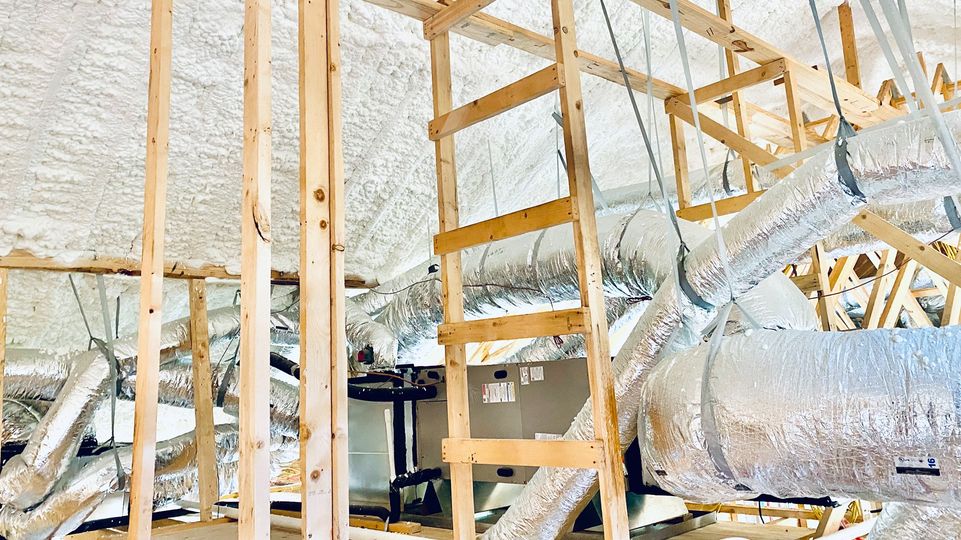
Hot Houston summers can push your AC hard. Cold snaps can do the same to your heater. A leaky, under-insulated attic lets treated air slip out fast. Outdoor heat and humidity slide right in. That forces longer run times and more starts. With attic insulation Houston TX and with tight weather sealing, your system holds temperature longer. Rooms feel steadier.
Your thermostat stops chasing swings. You may notice the system starts less often. Filters stay cleaner longer. You also get fewer drafts near ceilings and doors. Small gaps add up. Sealing them can cut waste and keep the whole house calmer.
Attic Air Leaks Add Work for Your HVAC
Leak Spots Around Recessed Lights, Hatches, and Top Plates
Attic air leaks often happen around recessed lights, hatches, and top plates. These spots allow air from outside to enter or conditioned air to escape. Recessed lights, for example, have gaps around them where air can sneak through. Sealing these gaps can improve the comfort inside your home. Hatches leading to the attic can also be weak spots. Insulation and air barriers around the hatch can help block air from getting through.
Top plates, where the walls meet the roof, are another common area for leaks. Sealing the edges of the top plate can help keep warm or cool air from escaping. All these areas can lead to higher energy bills if left unsealed. Fixing these leaks helps reduce your HVAC system’s workload and keeps your home more comfortable.
Weather Sealing Materials That Stop Drafts
Several materials can help stop drafts and seal leaks. Weatherstripping is one of the most common options. It’s easy to apply and works well for doors and windows. Caulking is another useful material. It can fill in small cracks and gaps, especially around windows and baseboards. For larger gaps, foam sealant might be a good choice. It expands to fill bigger spaces and blocks air from passing through.
Insulation is also helpful, especially in attics and walls. Adding more insulation can help reduce heat loss in the winter and keep your home cool in the summer. Another option is spray foam, which seals gaps and provides a barrier against drafts. Using these materials correctly can save energy and improve the efficiency of your HVAC system.
Insulation Slows Heat Flow Through the Ceiling
R-Value, Depth, and Even Coverage
The R-value of insulation tells you how well it resists heat flow. The higher the R-value, the better the material is at keeping heat inside during winter and outside during summer. It’s important to choose the right R-value for your area. A higher R-value is needed in colder climates, while a lower one is enough for warmer areas. The depth of insulation also matters. More insulation means better heat protection.
However, it’s not just about adding more; it’s about placing it evenly. Gaps or thin spots can reduce the effectiveness of your insulation. Make sure it covers the entire ceiling without leaving holes where air can escape. Even coverage will help keep your home comfortable year-round.
Clues Your Attic Needs More Insulation
There are signs your attic may need more insulation. One clue is the big difference between temperatures inside and outside. If your attic is much colder in the winter or hotter in the summer than the rest of your house, you might need more insulation. Another sign is drafts or uneven temperatures in rooms below the attic. If certain rooms feel too hot or too cold, the attic insulation might not be thick enough or well-covered.
Ice dams in winter are another hint that your attic needs more insulation. They happen when heat escapes through the roof, causing melting and refreezing. If you see any of these signs, it’s time to add more insulation.
Sealed Duct Paths Deliver Air Where You Need It
Supply and Return Leaks in Attics
Leaks in supply and return ducts can waste a lot of energy. These ducts carry air to and from your HVAC system. When there are holes or cracks in the ducts, air escapes. This means your system has to work harder to reach the right temperature. Leaks in the attic can be especially bad.
The air in these ducts may get mixed with outside air, making your HVAC system less efficient. This can lead to higher energy bills. Sealing the leaks can stop the air from escaping. It also keeps the air flowing to the right places in your home. Regularly checking and sealing ducts in your attic can improve the performance of your HVAC system.
Better Air Balance Between Rooms
Air balance between rooms is important for comfort. If some rooms are too hot and others too cold, the airflow might not be balanced. This can happen if there are leaks in the duct system or if the ducts aren’t sized correctly for the space. You can improve air balance by sealing any leaks in the ducts and making sure they are the right size.
You can also adjust dampers to control the airflow better. This helps the air flow more evenly throughout the house. A well-balanced system means each room gets the right amount of heating or cooling. Fixing air balance issues can make your home feel more comfortable all year long.
Humidity and Dust Control Starts Above the Ceiling
How Attic Air Affects Coils, Filters, and Comfort
The air in your attic can impact the performance of your HVAC system. When attic air is too humid, it can cause problems with your system’s coils and filters. Humid air can build up on coils, making them less efficient at cooling or heating the air. This can lead to higher energy use and less comfort in your home.
Dust from the attic can also get into filters, making them dirty faster. A clogged filter forces the HVAC system to work harder. This can lead to uneven temperatures and poor air quality. Keeping the attic well-ventilated can help reduce humidity and dust, allowing your HVAC system to perform better and maintain a comfortable environment in your home.
Fan Use and Venting That Move Moist Air Out
To control humidity, you need to use the right fans and venting in your attic. A good attic fan can help push moist air out, especially during hot or humid weather. Venting systems, like soffit vents and ridge vents, allow air to flow in and out of the attic. This helps reduce the moisture buildup that can cause issues with your HVAC system.
Proper venting helps maintain air circulation, which lowers the chances of mold and mildew growth. Fans can also help reduce attic temperature, preventing excess heat from affecting the rest of your home. Be sure to use these systems correctly to keep your attic dry and your home comfortable.
Lower Heating and Cooling Load Helps Parts Last Longer
Short Cycling, Hot Spots, and Noisy Starts
Short cycling, hot spots, and noisy starts can all put extra strain on your HVAC system. Short cycling happens when the system turns on and off too often. This wastes energy and wears out parts faster. Hot spots occur when some rooms are too hot or cold compared to others. This uneven air distribution makes the system work harder and can lead to breakdowns.
Noisy starts happen when the system has trouble starting up, often due to airflow issues. These problems can shorten the lifespan of your HVAC parts. By improving airflow and sealing leaks, you can help prevent these issues and make your system last longer.
Steadier Temperatures With Fewer Thermostat Changes
Keeping your thermostat steady helps reduce strain on your HVAC system. Constantly changing the temperature puts extra stress on the system as it constantly tries to adjust. This can lead to wear and tear on the components. A more stable temperature means the system doesn’t have to work as hard to maintain comfort.
By setting your thermostat to a comfortable temperature and leaving it alone, your system can run more efficiently. This helps reduce the need for frequent adjustments, which not only saves energy but also extends the life of the parts.
Let First Defense Insulation Help Improve Your Home’s Comfort
Taking care of your attic, ducts, and insulation can make a big difference in your home’s comfort and energy efficiency. Sealing air leaks, improving insulation, and ensuring good airflow help your HVAC system run better. It prevents problems like short cycling, hot spots, and noisy starts. With the right materials and techniques, you can keep your home cooler in the summer and warmer in the winter.
If you notice temperature imbalances or higher energy bills, it might be time to upgrade your attic insulation and seal leaks. First Defense Insulation is here to assist with any attic or HVAC needs. Visit us at 12 Greenway Plaza, Suite 1147, Houston, Texas 77046, or call 713-808-9853 for more information on improving your home’s energy efficiency.