
Adding plywood in an attic can seem like a smart way to gain storage space. Still, the job needs care. Plywood should not squash insulation or block airflow. That can hurt energy use and raise moisture problems over time. A better plan starts with knowing what sits below the storage area and how your attic moves air.
Good attic insulation helps keep rooms more comfortable and can lower strain on your HVAC system. Before you lay down any sheets, it helps to check joist height, vent paths, and the type of insulation already in place above your ceiling. Small details can prevent bigger problems later.
When Plywood Works in an Attic
Raised Platforms Above Loose Fill Insulation
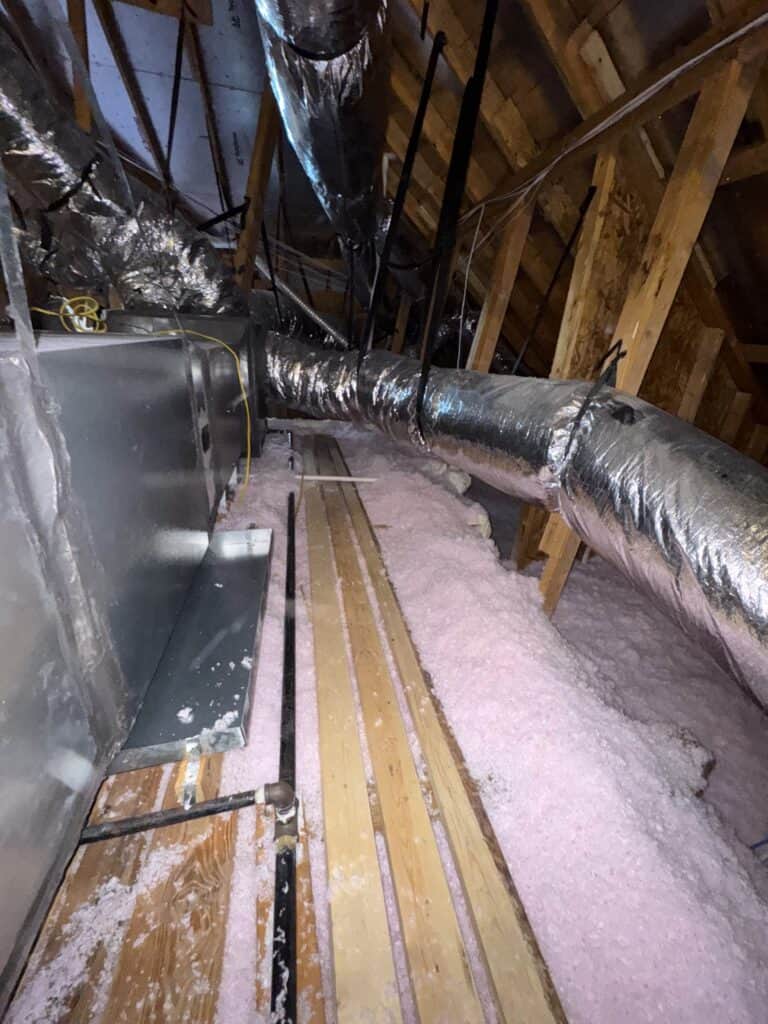
Plywood can work in an attic if it sits above loose fill insulation instead of pressing into it. Loose fill insulation needs room to stay thick and hold air. That air helps slow heat flow through the ceiling. If plywood rests right on the insulation, the material gets packed down. That can lower its R value and reduce how well it does its job. A raised platform helps avoid that problem.
The platform sits on supports fixed to the joists, with space left below for the insulation. This setup also helps keep vent paths open near the roof edge. Air needs room to move through the attic. Before the job starts, check joist height, insulation depth, and vent placement. A small raised area often works better than covering the whole attic.
Light Storage Over Framed Support Areas
Plywood also works in attic areas that already have framed support for light use. Some homes have a stronger section near the attic opening or near equipment that needs service. In spots like that, plywood can create a stable surface without pressing down large amounts of insulation. The main issue is weight. Most attics are not built for heavy loads.
Large furniture, full book boxes, and heavy tools can stress the framing. Light bins, holiday items, and small household goods are a better fit. Spread items out and keep paths open. Leave room around wiring, ducts, and vents. Check the wood before adding panels. Look for cracks, water marks, soft spots, or loose fasteners. A small storage area often works best and helps avoid damage.
When Plywood Causes Problems
Thin Joists Leave Little Room for Insulation
Plywood can cause trouble in attics with shallow joists. Many older homes have joists that do not leave much depth for insulation. If you place plywood right on top of those joists, the insulation below can get pressed down. That reduces the air pockets inside the material. Those air pockets help slow heat flow. Once they get crushed, the insulation may not work as well as it should. That can lead to hotter rooms in summer and colder rooms in winter.
The attic may also lose some of its energy saving value. Another problem is weight. Thin joists may not handle extra load well. Plywood, stored items, and foot traffic all add stress. In that case, a raised setup with proper support is usually a better choice than laying panels flat across the joists.
Blocked Vents Trap Heat and Moisture
Plywood can also create problems if it blocks attic vents. Attics need airflow to move heat and moisture out of the space. Many homes use soffit vents near the roof edge and other vents near the top of the roof. That air path helps keep the attic dry and helps control heat buildup. If plywood covers insulation and pushes it into the vent area, air may not move as it should. Moisture can then build up inside the attic.
Over time, that can lead to damp wood, stains, and mold growth. Heat can also collect in the space and raise the attic temperature. Before adding any plywood, check where the vents sit and keep those paths open. Good airflow helps protect the roof structure and helps the insulation keep working well.
Better Ways to Support Attic Storage
Sleepers Can Lift the Plywood
Sleepers can help create space between the plywood and the insulation. A sleeper is a strip of wood set across or along the attic joists. It raises the plywood so the insulation below does not get packed down. That extra height helps the insulation keep its shape and hold air. It also gives you a firmer surface for walking or storing light items. The amount of lift matters.
The sleeper should provide enough room for the insulation depth already in place. It also helps to keep the plywood level across the area. Before adding sleepers, check the attic framing for damage, loose boards, or signs of past leaks. A raised surface can work well, but it still needs proper support and open vent paths around the roof edge.
Small Walkways Limit Pressure
A small walkway often works better than covering a large attic area with plywood. This approach limits pressure on the insulation and puts less weight on the framing. It also helps you reach key spots, such as the attic hatch, air handler, or other service points, without stepping on loose fill insulation. A narrow path leaves more of the attic open, which helps the insulation stay thick across the rest of the floor.
That can support better heat control in the rooms below. Walkways also use fewer materials, so the job stays simpler. Keep the path over supported framing and avoid weak spots. Leave space around vents, wiring, and ducts. A focused path can give you access where you need it without changing the whole attic floor.
Safety Checks Before You Start
Wiring, Lights, and Ducts Need Clearance
Before you place any plywood in the attic, look at everything that runs across the floor or through the framing. Electrical wiring needs open space and should not get pinched under a panel. Recessed lights also need care. Some fixtures give off a lot of heat, and insulation packed too close can create problems. Ducts need room as well. If a board presses on a duct, airflow can drop, and rooms below may not heat or cool as they should.
Watch for junction boxes, loose cables, and bath fan vents. These parts should stay visible and easy to reach. Plywood should never block access to service points. A careful look before the job starts can help prevent damage, poor airflow, and safety issues later.
Roof Leaks Should Be Fixed First
A roof leak can turn a simple attic project into a bigger problem fast. If water gets into the attic, it can soak the insulation, stain the wood, and weaken parts of the ceiling below. Wet insulation does not work as well as dry insulation. It can also hold moisture for a long time. Before adding plywood, look for dark marks on rafters, damp spots on insulation, rusty nails, or a musty smell.
These signs may point to a leak above. Check around roof vents, chimneys, and valleys, since those areas often leak first. Fixing the leak first helps protect the attic space and the materials you add later. Dry conditions give you a better base for any plywood work.
Smart Storage Rules After Install
Keep Weight Near Strong Framing
After the plywood is in place, storage habits still matter. The safest plan is to keep the weight near strong framing points. These areas often sit close to the attic opening, near support walls, or above joists that carry more load. Heavy boxes placed in weak spots can strain the ceiling below. That can lead to sagging, cracked drywall, or loose fasteners over time. Use the attic for light items first.
Holiday bins, small keepsakes, and empty luggage are often better choices than books, tools, or large furniture. Spread items across the surface instead of stacking them in one tight area. Leave some open space between boxes. That helps you move around safely and lowers stress on one section of the attic.
Leave Service Areas Open
Open access matters after plywood goes down and storage begins. Attics often hold wiring, ducts, bath fan vents, junction boxes, and parts of the heating and cooling system. These areas should stay clear. Boxes and bins should not block them. A worker may need to get to these parts later for repair or routine care. If stored items crowd the space, simple work can take longer and cost more.
Closed off areas can also hide leaks, loose wires, or damaged ducts. Keep a clear path from the attic opening to all main equipment. Leave space around vents so air can move as planned. A neat attic with open access is safer, easier to use, and easier to inspect over time.
Protect Your Attic With First Defense Insulation
Plywood can help create storage space in the attic, but the setup should protect insulation, airflow, and ceiling strength. Pressing insulation down can reduce its performance and lead to moisture trouble. A raised platform often works better because it leaves room for the insulation to do its job.
First Defense Insulation can help homeowners choose a better attic setup for comfort, storage, and energy savings. If you want a safer attic space that supports your home year-round, we are here to help. Visit us at 12 Greenway Plaza, Suite 1147, Houston, Texas 77046, or call 713-808-9853 for attic insulation help.