
First Defense Insulation installs blown-in insulation across Houston in both materials, loose-fill fiberglass and cellulose, for attics and wall cavities. Most residential jobs are finished in a single day, typically within 4 to 6 hours, and every one starts with a free on-site comfort inspection.
Blow-in describes the installation method rather than the material. A hose fed by a blowing machine distributes loose insulation across the attic floor or into a wall cavity, filling around joists, wiring and framing that batt insulation has to be cut around and rarely seals against. Both fiberglass and cellulose are made in blown-in form, and blown-in cellulose is also sold as loose-fill cellulose.
Our team carries 35 years of combined experience, holds a BBB A+ rating and a 5.0 review rating from 93 Houston customers.
Call (713) 808-9853 for a free estimate.
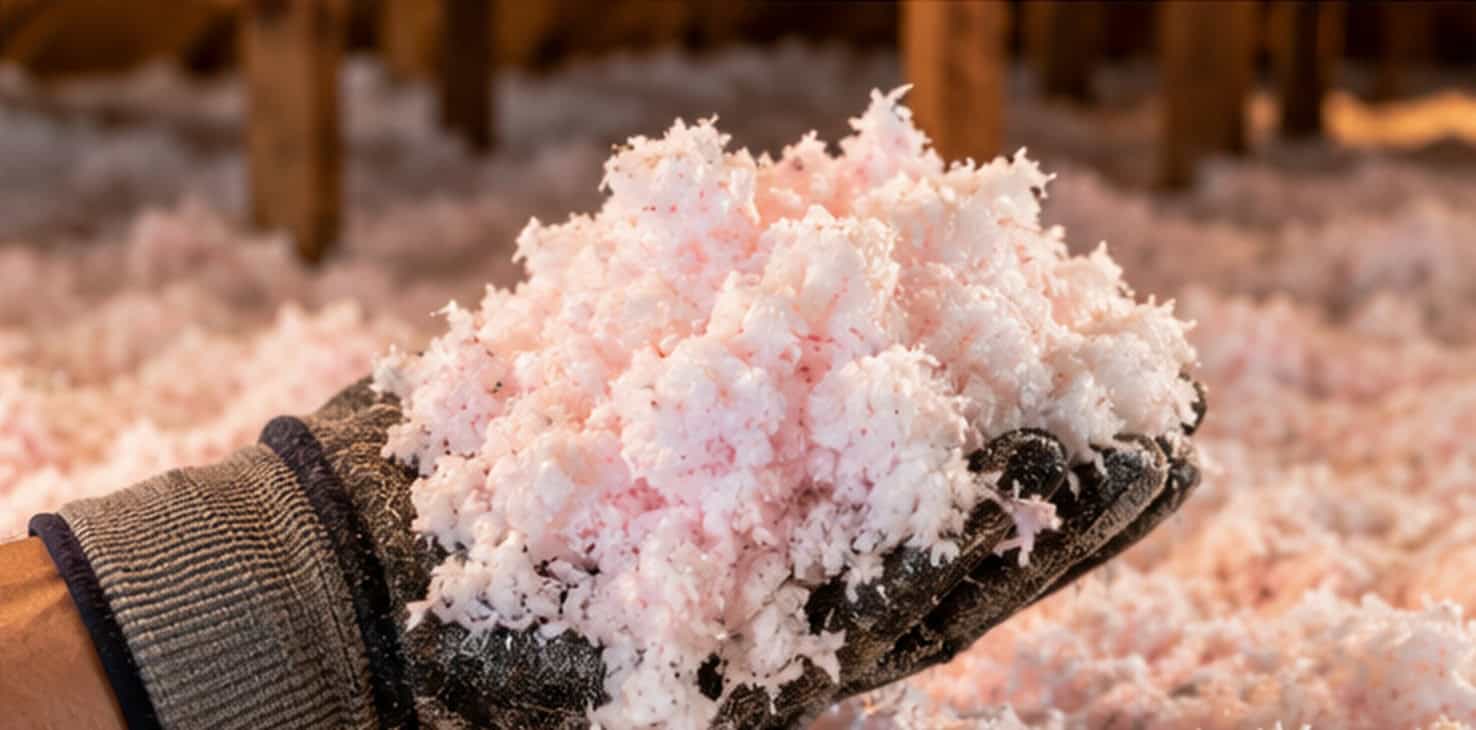
Both materials go in the same way and both work. They differ in density, R-value per inch, and how they behave over time. We install both and recommend based on your attic rather than on what happens to be on the truck.
Spun glass fiber, blown loose across the attic floor.
Fiberglass suits attics where long-term stability matters and where moisture exposure is a possibility.
Recycled paper fiber, treated and blown loose. Also called loose-fill cellulose.
Cellulose reaches a target R-value in less depth, which matters in attics where headroom or joist height is limited.
There is no single right answer, and any contractor who gives you one without seeing the attic is guessing. We look at existing insulation depth, joist height, whether the attic is used for storage, moisture history and your target R-value before recommending either.
Houston sits in Climate Zone 2. The recommended attic level for this region is R-38 to R-49
Reaching that target takes different depths depending on the material:
Most Houston attics we inspect fall short of both. Insulation settles and compresses over the years, and homes built before 1980 predate building code insulation minimums entirely. If you can see the tops of your ceiling joists across the attic floor, you are well below where you should be.
The attic accounts for roughly a quarter of the energy a home loses. It is the cheapest place to fix that, which is why it is almost always the first thing we recommend.
Four things set the price: the square footage of your attic, the material, the depth needed to reach your target R-value, and whether existing insulation has to come out first.
Typical Houston figures:
Blown-in is the most cost-effective way to raise an attic’s R-value, which is why it is the most common attic insulation in Houston homes. Cellulose typically costs slightly less per square foot than fiberglass at the same R-value, because it reaches the target in less depth.
Financing is available and every estimate is free and in writing before any work starts.
Attic floors. The most common application by a wide margin. Loose insulation is blown across the attic floor and between the joists, forming a continuous blanket with no gaps at the framing.
Wall cavities. Blown-in fills closed wall cavities through small access holes, reaching around wiring, outlets and plumbing that batts leave uncovered.
Attic re-blow. Adding new material over existing insulation that has settled or thinned, without removing what is already there.
New construction. Insulation installed before drywall goes up, which is faster and cleaner than any retrofit.
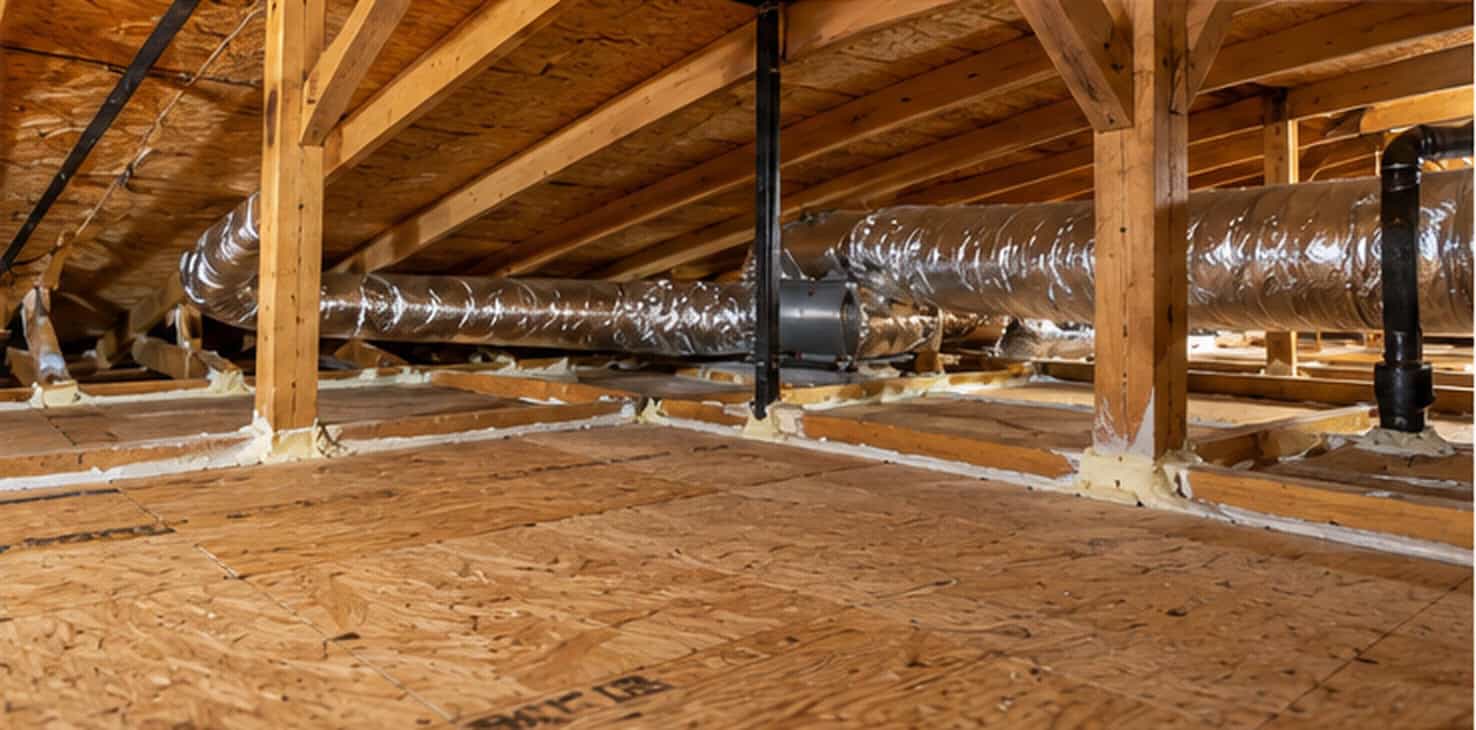
We measure existing depth and R-value, check for moisture, mold, pest damage and air leaks, and look at how the attic is used.
Material, target R-value, depth and price, in writing, before anything starts.
Wet, contaminated or rodent-damaged insulation comes out and is bagged. Insulation that is merely thin does not.
We seal gaps around can lights, plumbing stacks, duct penetrations and the attic hatch. This comes before insulation in nearly every job, because loose fill over an unsealed attic floor lets conditioned air pass straight through it.
Installed at the eaves so new insulation cannot block soffit vents and choke the attic’s airflow.
Material is blown to the agreed depth across the full attic floor, verified against depth markers.
We show you the finished coverage and haul everything away.
Most residential projects run 4 to 6 hours start to finish.
You usually do not need to remove what is already up there. Blown-in goes straight over settled insulation and brings the whole attic up to depth, which is one reason it costs less than a full replacement.
Two conditions change that. If the existing insulation is wet, mouldy or contaminated by rodents, it has to come out first, because covering a problem does not solve it. And in almost every case air sealing should happen before new material goes down, since it is far harder to reach the penetrations once fresh insulation is covering them.
Blowing loose insulation across an attic floor and then stacking boxes on it compresses the material and destroys the R-value exactly where you walk.
We build around it. Plywood decking is raised on dams in the areas you actually use, with cellulose installed behind the dams so the depth is maintained right up to the edge of the platform. Air-sealing foam closes the remaining gaps across the rest of the attic floor.
You keep the storage. The insulation keeps its rating everywhere else.
Our blown-in insulation installers work across Houston and the surrounding communities, including Katy, Cypress, Spring, Humble, Magnolia, The Woodlands and Conroe.
Most Houston attic projects run $1,500 to $4,000, or roughly $1.00 to $2.50 per square foot installed, with the Houston average around $1,600. Depth, material and any removal of old insulation move the figure. Estimates are free.
Neither is better everywhere. Cellulose reaches a target R-value in less depth and resists mold and pests through its borate treatment. Fiberglass will not settle over time and cannot rot or corrode wiring. We recommend after seeing the attic.
For a Houston attic, aim for R-38 to R-49. That is roughly 16 to 20 inches of blown fiberglass, or 11 to 14 inches of cellulose.
Usually yes, and that is one of its advantages. The exception is insulation that is wet, mouldy or rodent-contaminated, which must be removed first.
Most residential attic projects are completed in a single day, typically within 4 to 6 hours.
Cellulose settles somewhat over time, which is why it is installed to a depth that accounts for it. Blown fiberglass holds its loft and does not settle appreciably.
The machine can be rented, so it is possible. Doing it well is another matter. Even coverage, correct depth, baffles at the eaves and air sealing before the material goes down are what determine whether the insulation performs, and all four are easy to get wrong.
Cellulose is treated with borate to a Class-1 fire safety rating, the highest available. Fiberglass is inorganic glass and does not burn.
Both materials last decades when kept dry. We recommend a visual inspection every 5 years, with full replacement typically needed after 20 to 30 years or sooner if there is moisture or pest damage.
Call (713) 808-9853 or request a free on-site comfort inspection from our Houston insulation company. We measure what is there, recommend the right material and depth, and give you the price in writing before any work begins.